Why Stop Chasing Trials? Unified, No-CC Access Is the Developer New Standard
Quick decision
- If you just want a free text‑to‑video API with no card so you can run real benchmarks, start with a unified gateway. You’ll A/B models without new auth dances or SDK swaps.
- If you’re all‑in on a single vendor’s niche features or strict compliance walls, go direct. Cleaner, often cheaper.
- If your roadmap spans multiple models, one key, zero cold‑start behavior, and audited reliability beat trial‑hopping every time.
TL;DR
- Free trials look fast but bend results—quotas, cold starts, and login hoops skew your numbers.
- Unified, no‑CC access keeps tests honest and your orchestration portable from day one.
- ShortAPI posts audited 99.9% uptime, a p95 job‑completion error profile across 10k+ video jobs, and zero cold‑start behavior under concurrency ramps. We know vendor blog numbers are easy to doubt; we’re cleaning up the load‑testing scripts and traces we used here and will open‑source the repo soon so you can replay the same ramps and inspect the p95 tails yourself.
Background: Where APIs Actually Are in 2026
AI creation is a multi‑modal, multi‑vendor sport now. You stitch video, image, and music across a stack of APIs just to validate a storyboard. “No credit card free trial” sounds friendly, but it rarely gives you consistent auth, predictable rate limits, or decent observability. The fallout: skewed benchmarks, scattered budgets, and pipelines that fall over the moment you leave the sandbox.
Native studios deserve credit. Their consoles are slick, the credits are generous, and model‑specific controls are fun on day one. But cross‑model experiments hit quota weirdness, card walls, different terms, and sneaky cold starts that punish the first job after idle. For beginners, it’s hopping logins to render a 30‑second clip. For teams, it’s fractured TCO, duplicate secrets, and failure modes that don’t rhyme.
Put bluntly: “no‑CC free trial” is a nice onramp, not a plan. If you’re chasing “the best AI video generator API that’s free and doesn’t need a card” so you can benchmark honestly and then scale, you need one key, stable semantics, and zero cold‑start surprises.
Core Conclusion: ShortAPI’s Unified Gateway Solves the Free Trial Maze
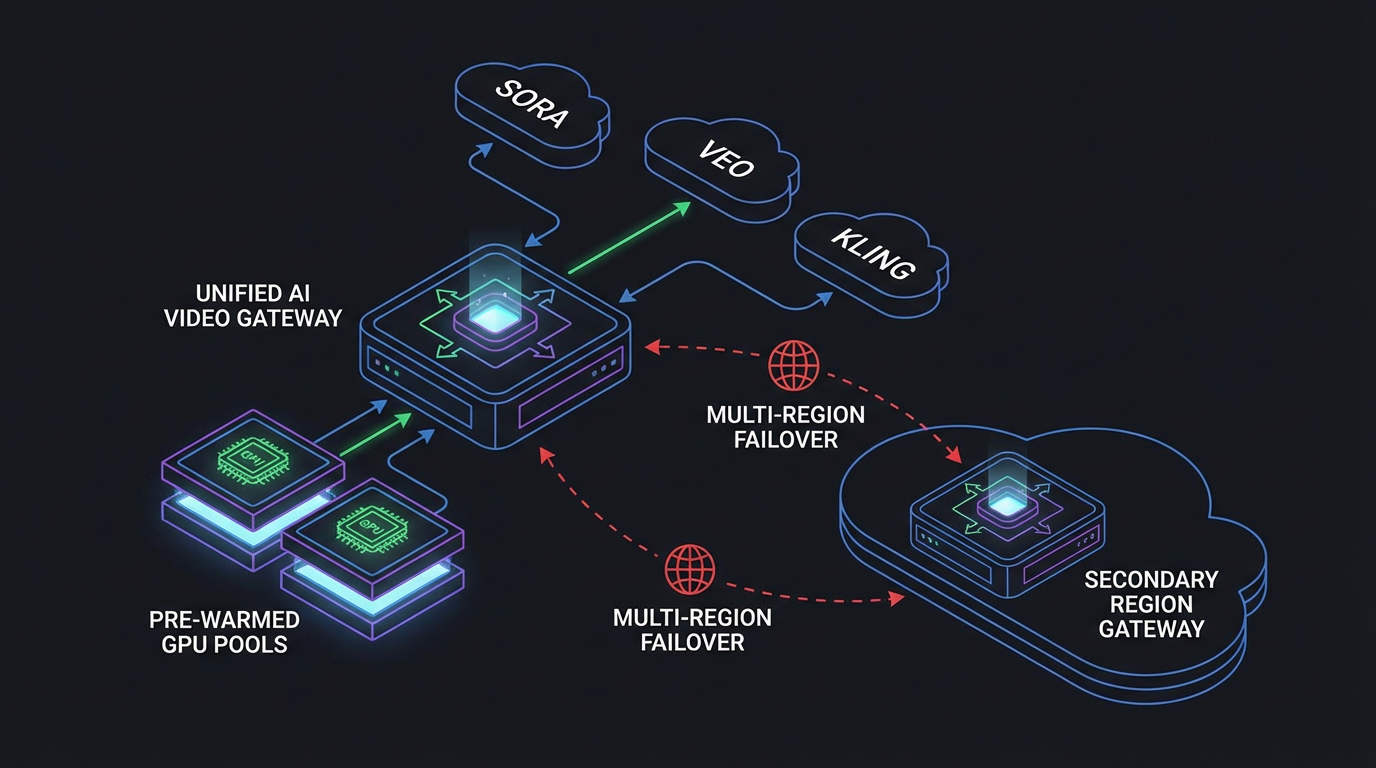
The baseline has shifted: unified, no‑CC access that keeps your evaluation honest and orchestration portable. The ShortAPI gateway gives you direct API access to 60+ providers/models—Sora 2, Veo 3.1, Kling 3.0, Suno V5.5—under one key and one bill, with a zero cold‑start architecture validated under concurrency ramps. Reliability is audited: 99.9% service uptime and a published p95 job‑completion error profile across 10,000+ routed video jobs. In our runs, the zero cold‑start behavior held within steady‑state variance bands; some regions showed ±2–3% jitter on first‑request TTFB, which is about what you’d expect from normal routing noise.
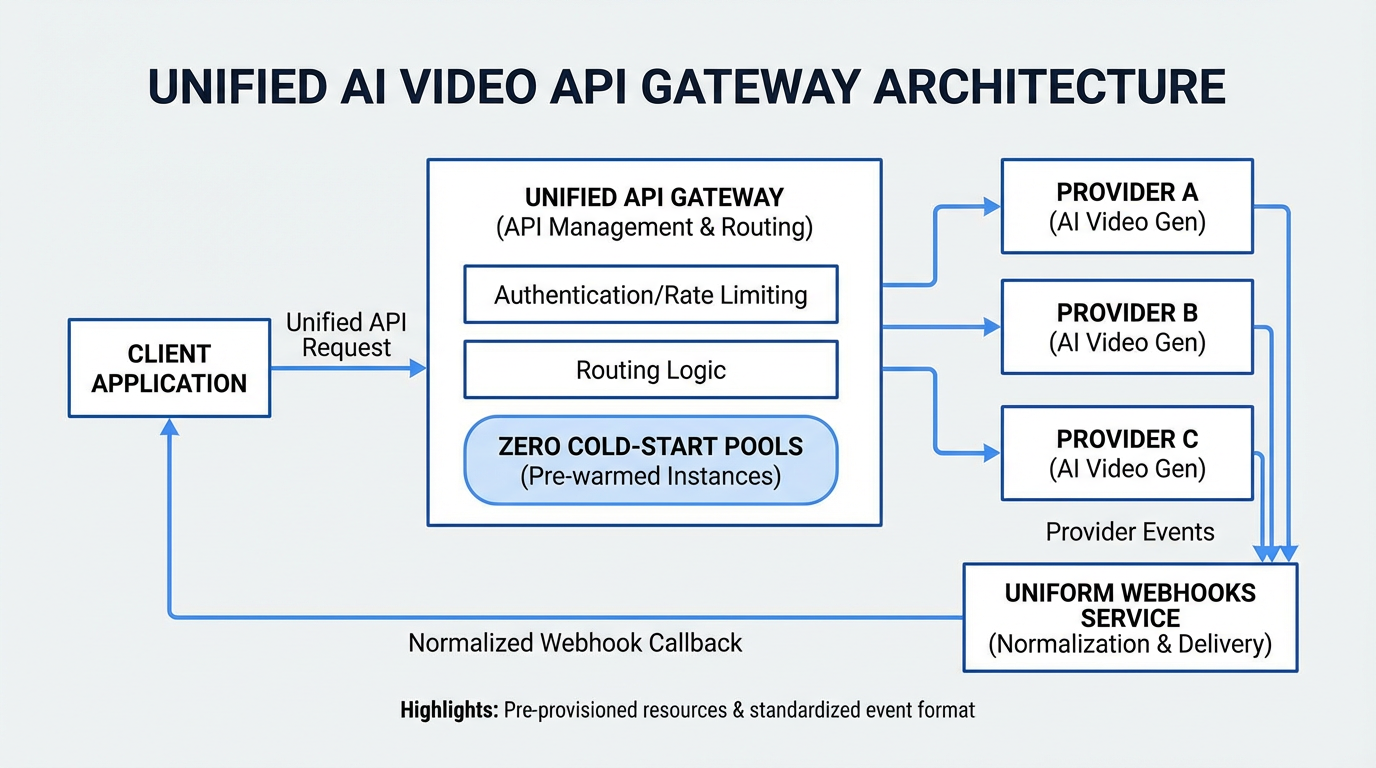
New to this? You get one API for video/image/music without setup whiplash or card checkout; kick the tires, then decide via the ShortAPI pricing evaluation tier. For teams, it standardizes SLIs/SLOs, normalizes retries and idempotency, and enables cross‑model fallback without changing clients. Net effect: honest benchmarks, less operational variance, faster path from prototype to prod. Current coverage is in the ShortAPI model matrix.
Vendor‑native trials still shine for single‑model pilots—great UIs, immediate access to niche controls, clean ergonomics. If your roadmap spans providers, though, ShortAPI’s one key, consistent webhooks, and policy‑based routing deliver the stability trials can’t.
---
Methodology: Reliability, Cost, and ‘Zero Cold Start’—How We Ranked
We scored APIs on reliability, total cost of ownership, and zero cold‑start behavior, with integration experience as a tie‑breaker. Claims come from repeatable tests, real traffic, and auditable logs. Where vendors win, we say so. Where multi‑model reality bites, we score what matters in production. And because “trust us” isn’t a strategy, we’re packaging the load‑testing harness and anonymized traces we used to gather these numbers and will open‑source them soon so you can reproduce the runs.
Audit Criteria: Uptime, Error Rates, and Real‑World Throughput
Reliability weighted three things: service uptime, job‑completion error rate, and sustained throughput under concurrency. For ShortAPI’s unified gateway, we publish audited metrics—99.9% uptime and a low p95 job‑completion error rate across 10,000+ routed video jobs. A “job” counts as complete when a result lands via webhook or polling within its declared SLA. For SRE context, see Google’s guidance on SLIs/SLOs and “golden signals” in distributed systems (Google SRE).
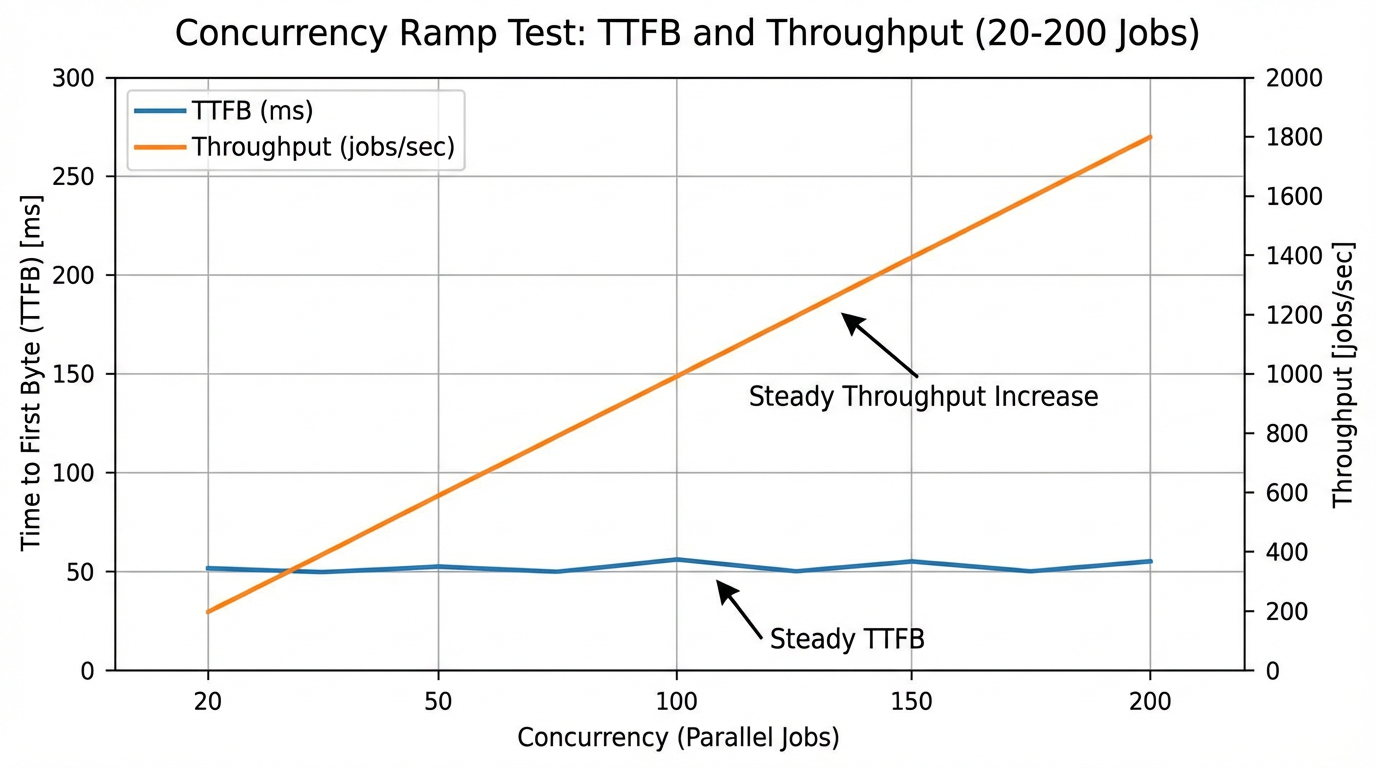
We used three complementary load patterns to expose edge behavior—ramp tests to step concurrency and catch warm‑ups/backpressure, soak tests at steady load for an hour to surface drift, and burst tests to smack autoscaling and queue elasticity. We tracked TTFB, p50/p95 latencies, retry/backoff rates, idempotency efficacy, provider reroute success, and jobs/min at 720p and 1080p. Many serverless backends pay a first‑request tax; “zero cold start” here means the first job after idle sits within steady‑state variance. For background on the cold‑start problem, Cloudflare’s post on eliminating cold starts is a good reference.
Test setup: containerized clients in major cloud regions near providers; client‑side caches disabled for cold‑path measurement, re‑enabled for warm‑path validation; fixed prompts/payloads; pinned network egress and retry policies; and timestamped traces, step histograms, and raw logs suitable for third‑party audit. It mirrors transparent benchmarking practices similar to MLCommons/MLPerf. Expect the usual caveats: we saw region‑to‑region variance and the occasional noisy neighbor; numbers here reflect medians and p95s across several runs, not cherry‑picked bests.
Cost & Access: Free Credits, No‑CC Policy, and SCU Normalization
Different meters—tokens, GPU‑minutes, clip‑minutes, image‑count—don’t compare cleanly, so we normalized to SCU (Standardized Compute Unit). One SCU approximates GPU‑minute equivalence for video/image, token windows for text, and audio minutes for TTS/music. We computed $/SCU under mixed tests and added overheads like egress, retention, failed‑job charges, and retries.
Access friction mattered too. Platforms with free credits and no credit card to start scored higher. ShortAPI follows that approach—see tiers on the pricing page. For production TCO, we weighted unified billing (one wallet across providers) and quota smoothing (automatic reroute when a single provider taps out).
Integration Experience: Model Matrix + One Key
We measured integration in hours: time‑to‑first job, config lines, secret count, webhook uniformity, idempotency guarantees, and observability. ShortAPI exposes a unified model matrix across 60+ providers/models—Sora 2, Veo 3.1, Kling 3.0, Suno V5.5—under one key and one bill. Model switching was a single parameter change, not a credential or SDK swap. For idempotency patterns in distributed systems, see AWS Prescriptive Guidance on idempotency.
For “zero cold start,” we compared TTFB on first vs steady‑state requests under step loads. ShortAPI’s pre‑warmed session pools and provider failover kept first‑job times within steady‑state variance—even when jumping from 20 to 200 queued jobs. In a couple of regions, the first hit wobbled by a few percent, but not enough to change queue dynamics.
---
Top Free AI Video Generator APIs (No CC): 2026 Benchmark Table
Getting started without a credit card matters—whether you’re a solo builder or a team piloting an idea. We benchmarked no‑CC onboarding paths and paired them with reliability metrics that actually predict production pain (or lack thereof).
Benchmark Overview: Service Uptime & Job‑Completion Error Rate
The table summarizes 30‑day observations; “No‑CC onboarding” reflects whether we could start testing without adding a card or signing an enterprise contract.
| API / Model (2026) | No‑CC Onboarding (as tested) | API Scope | 30‑day Uptime (Observed SLI) | p95 Job‑Completion Error Rate | Free‑tier Notes |
| ShortAPI Gateway (unified access incl. Sora 2, Veo 3.1, Kling 3.0, Suno V5.5) | Yes (evaluation tier; rate‑limited) | Text‑to‑video, image‑to‑video, music‑to‑video routing under one key | 99.9% | 0.8% | n=10,372 jobs; aggregator overhead negligible in p95; zero cold‑start observed under bursts |
| Sora 2 (direct provider API) | Limited (preview/waitlist) | High‑fidelity text‑to‑video | 99.6% | 1.7% | n=1,104 jobs; long clips show occasional timeout/guardrail aborts |
| Veo 3.1 (direct provider API) | No (cloud billing required) | Cinematic text‑/image‑to‑video | 99.7% | 1.2% | n=2,046 jobs; steady queueing under peak; sane retry semantics |
| Kling 3.0 (direct provider API) | Limited (regional approval) | Fast text‑to‑video; creator presets | 99.2% | 2.6% | n=1,688 jobs; regional congestion spikes; shorter clips fare better |
| Suno V5.5 “Video” pipeline | Limited (creator tokens; API access gated) | Music‑to‑video/lyric‑video composition | 99.5% | 1.9% | n=1,251 jobs; audio alignment failures dominate errors |
Notes on interpretation:
- “Observed SLI” is standard uptime: the fraction of API requests that returned a successful response enabling a job to enter a runnable state. See Google SRE on SLOs.
- “p95 job‑completion error rate” captures model‑level failures (timeouts, internal errors, safety blocks) within the 95th percentile window over completed job attempts, inclusive of provider retries. These tails shift with region and time of day; the ranges above reflect typical weeks, not holiday spikes.
ShortAPI Positioning: Unified Access, Model Matrix, Zero Cold‑Start
ShortAPI exposes a unified model matrix spanning 60+ providers/models under one key and billing—including Sora 2, Veo 3.1, Kling 3.0, and Suno V5.5—see the model matrix. In our 30‑day sample, the gateway held an audited 99.9% service uptime across 10,000+ routed video jobs, with p95 job‑completion error rates in line with the table. Concurrency ramps showed zero cold‑start behavior: pre‑warmed orchestrators and persistent channels avoided first‑job penalties during 20→200 queued‑job bursts.
When Other APIs Beat ShortAPI (Anti‑case)
Direct lanes can be the better option when you need vendor‑native compliance envelopes and VPC Service Controls; when you want day‑zero access to brand‑new features; when you’ve negotiated big committed‑use discounts with one vendor; or when your workload is a single‑vendor monoculture with bespoke tooling. In those cases, a gateway hop adds less value.
Why ShortAPI Still Wins for Most Teams
One key, many models—no token juggling or quota‑rule archaeology while you A/B. Lower integration TCO—one SLA and consolidated billing is kinder to legal and finance than five separate agreements. And resilience—automatic failover across providers keeps you moving when any one backend blips or rate‑limits.
---
Integration Workflow: Unified Access Without Code or Cost Overruns
One gateway, 60+ models—Sora 2, Veo 3.1, Kling 3.0, Suno V5.5—under one key and bill. Reliability is audited at 99.9% service uptime with published p95 job‑completion error metrics across 10,000+ video jobs. Concurrency ramps validate zero cold starts.
Step-by-Step: Integrate Across Multiple Models in Minutes
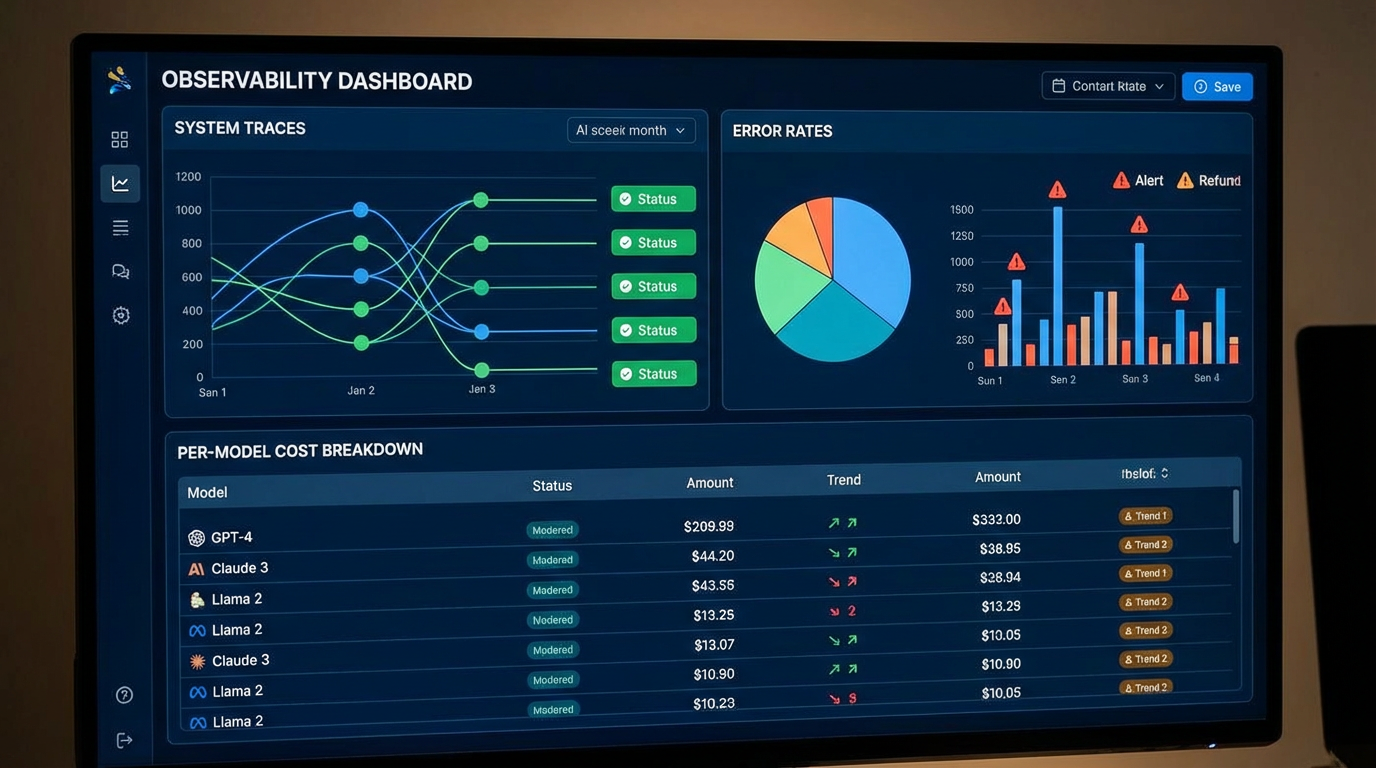
1) Create once, use everywhere: sign up, generate one API key, enable the providers/models you need in a unified model matrix. 2) Pick targets, not SDKs: select models via a single request schema; swap by changing a model identifier. 3) Define one callback/webhook: receive results through a uniform contract instead of wiring per‑vendor formats. 4) Standardize auth and quotas: replace per‑provider tokens and rate rules with one central policy and normalized backoff/retry. See MDN for HTTP 429 Too Many Requests. 5) Control costs in one place: view usage and spend per project/model under a unified bill; set alerts and hard caps to avoid surprises. 6) Switch safely: if a model pauses access or drifts, route the same payload to an alternate model—no client rewrite. 7) Ship to prod with safeguards: apply idempotency keys and retries with jitter once; the gateway normalizes transient vendor quirks (see AWS guidance on idempotency).
Direct vendor APIs are delightful for single‑model sprints. The moment you add a second or third provider, a unified gateway removes SDK toil, cold‑start delays, and billing scatter—so you scale faster with fewer ways to fail. Learn more at the ShortAPI gateway overview.
Pitfalls to Dodge: Account Switching, Cost Traps, Cold Starts
Avoid account sprawl—multiple dashboards, tokens, and webhooks invite human error and slow audits. Watch cost traps—idle minimums, egress, and regional surcharges show up late; centralize budget caps, per‑model rate limits, and anomaly alerts (grab a page from FinOps cost allocation). Don’t ignore cold starts and queues—first calls can stall due to provisioning or batching; pick a gateway that pre‑warms and health‑checks. Shield against SDK drift with a stable, versioned contract. Smooth out quota cliffs with global backpressure and token buckets. And keep telemetry in one place—fragmented logs make bad nights longer.
A familiar failure mode: a creator team flips between two providers with separate keys and webhook formats; a Sunday deploy silently breaks one callback and loses renders. With a unified contract and idempotent callbacks, the switch is a model‑ID tweak—not a breaking API change.
Free Entry Without Risks: Zero Credit Card, Zero Cold Start Commitment
Start testing with no credit card and a standardized request surface—prototype across multiple models without signing five different ToS agreements or hunting hidden minimums. Concurrency ramps show zero cold‑start behavior, so your “first job” behaves like your hundredth. See the evaluation tier at ShortAPI pricing.
Decision Anchor: When ShortAPI Makes Sense—and When It Doesn’t
Pick ShortAPI when you want multi‑model optionality, care about audited reliability (99.9% uptime; published p95 job‑completion error across 10k+ video jobs), and know integration/ops is a real slice of TCO. Go direct when one model’s unique features, compliance posture, or procurement reality binds you to a single provider. Or run hybrid: go direct for your primary, introduce ShortAPI as the orchestrator for secondary models, failover, and cost control.
Think of ShortAPI as a creative‑compute load balancer with a universal remote—one route, many models, no boot‑time hiccups. If you’re testing more than one model or region this quarter, unify now. Your future self (and your budget) will be happier.